

Robbie Bushe
Robbie Bushe is a narrative painter drawn to imagined architecture, layered memory, and the social structures we build around ourselves. His paintings often take the form of sprawling cross-sections—cutaway views of cities, buildings, and lives. These works blend the real and the invented, the personal and the public. He draws from comics, sci-fi cinema, and textbook diagrams, merging timelines and compressing space to tell visual stories.
Robbie works fast, in bursts, juggling sketchbooks and large canvases. Some parts are tightly planned; others more chaotic or instinctive. That tension, he explains, keeps him engaged. The people in his paintings are mostly fictional, but their world reflects places he has lived—Liverpool, Aberdeenshire, Oxford, Edinburgh—and stories glimpsed from stairwells, buses, and daydreams. Painting remains his way of making sense of it all.
Robbie Bushe RSA is a Scottish-based painter known for intricately detailed, narrative-driven artworks that explore fictional cityscapes, speculative histories, and social infrastructure. His large-scale paintings draw on cutaway illustration techniques, often populated with imagined characters and urban vignettes.
Born in Liverpool in 1964 and raised in Aberdeenshire, he studied Painting at Edinburgh College of Art. His work has received national recognition, including the Guthrie Medal (1997), W. Gordon Smith Painting Prize (2016), John Moores Painting Prize (2021), and Highly Commended at the Contemporary British Painting Prize (2023). In 2023, he was awarded the inaugural RSA Blackadder Houston Mid-Career Painting Prize.
Bushe has taught at Gray’s School of Art, Oxford Brookes, Chichester, and the University of Edinburgh. He is an elected member of the Royal Scottish Academy and Contemporary British Painting. His collaborative project NEONEANDERTHALS with anthropologist Jeanne Cannizzo was exhibited at the Royal Scottish Academy in 2019.
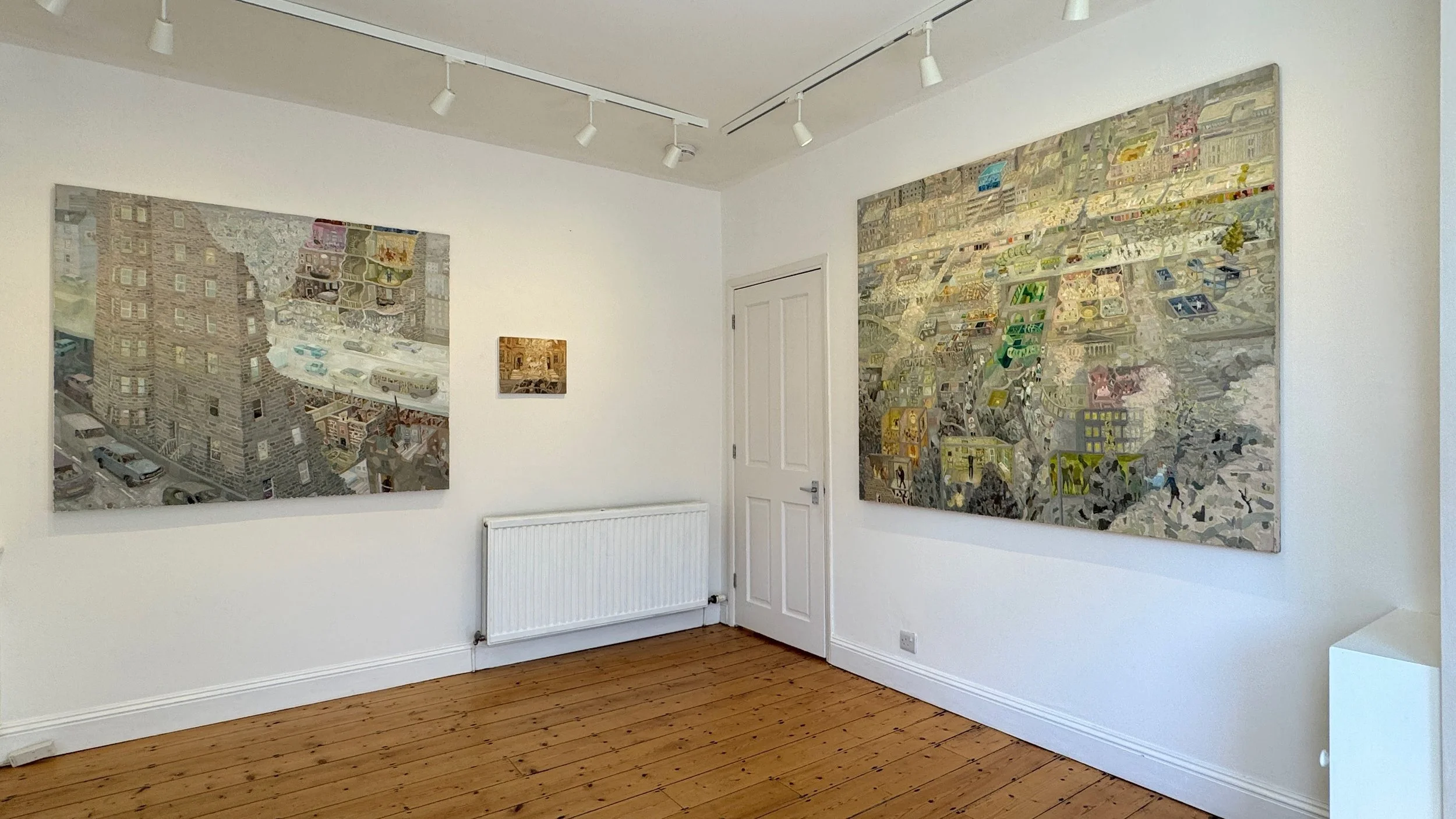
Irving Gallery hosts Robbie Bushe’s solo show, ‘Living Rooms’ from 7th May to 7th June 2026.

Photo: Helen Pugh Photography
Catalogue of available works
Oil paintings
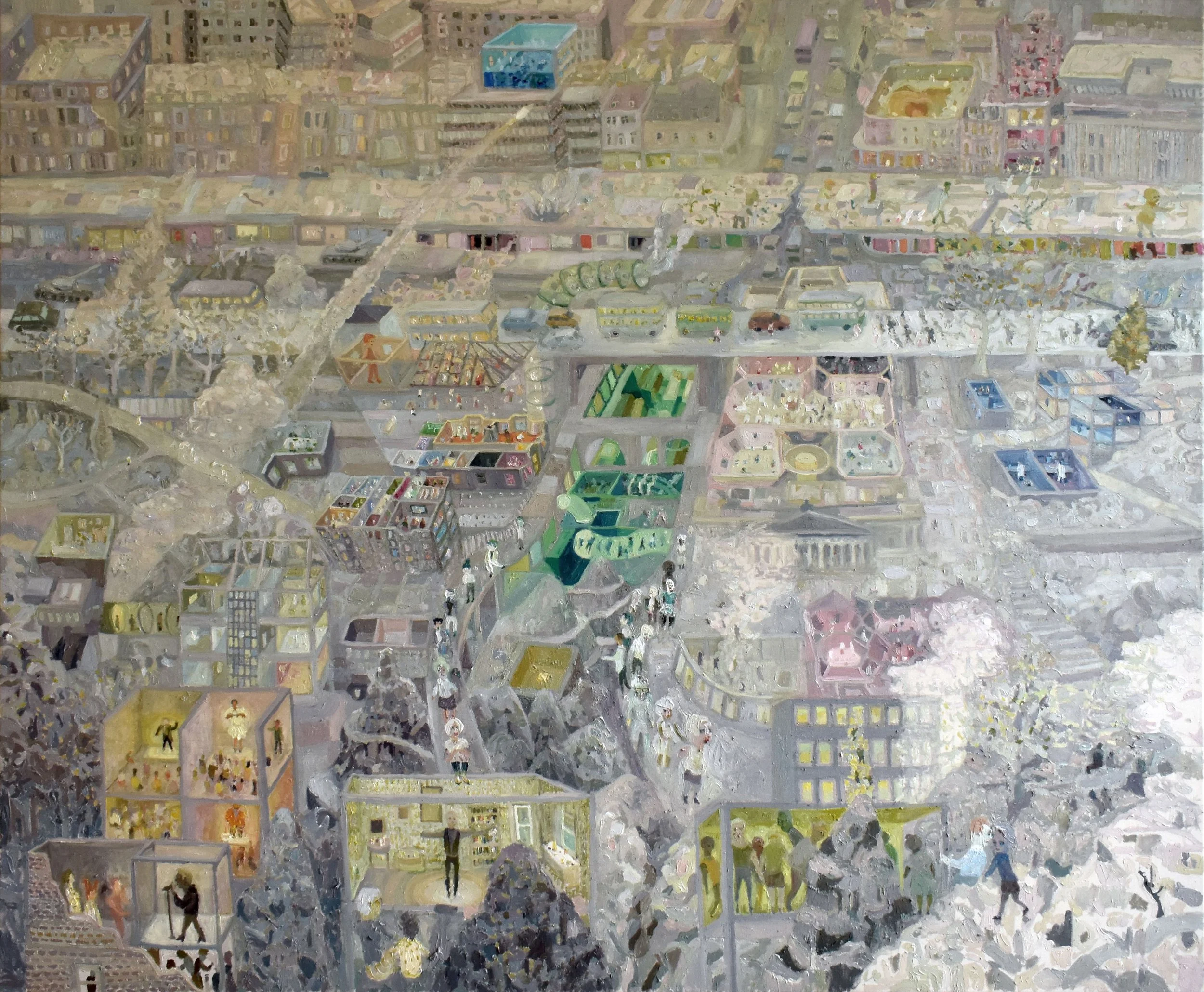
‘The Mound’, 2024. Oil on canvas, 140 × 170 × 3 cm. £11,500
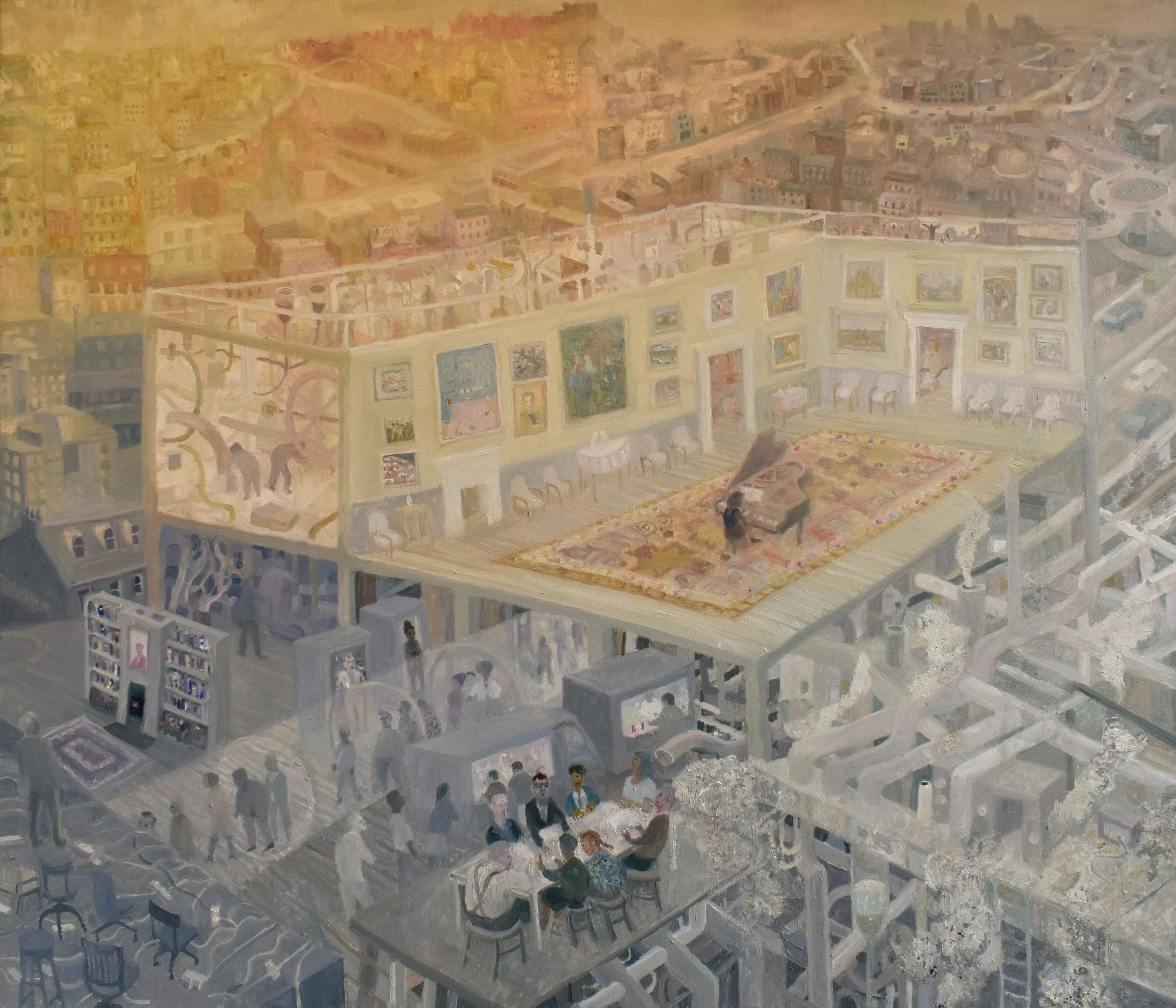
'The Pianist', 2024. Oil on canvas, 120 x 140 x 3 cm. £7,800
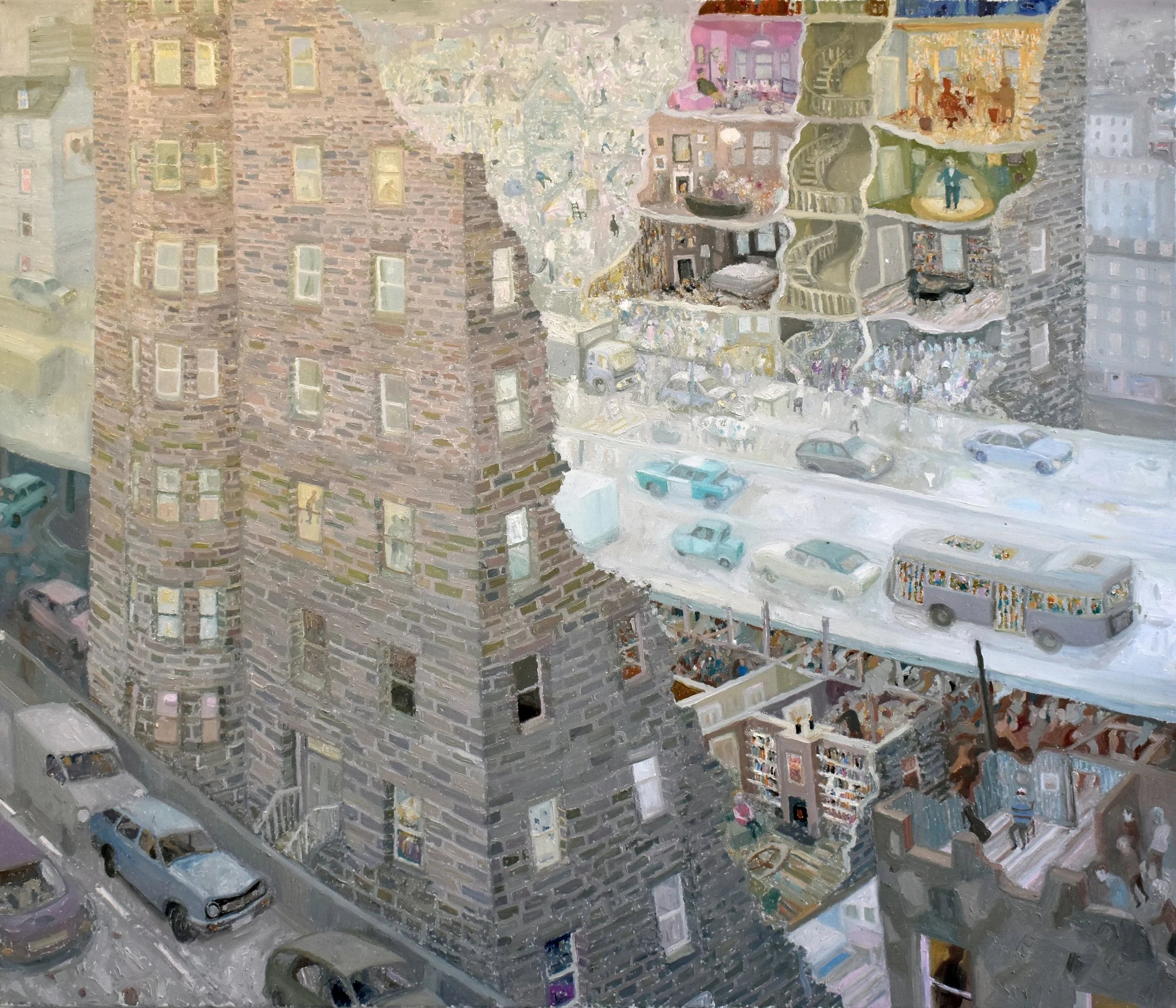
'Through Road', 2024. Oil on canvas, 120 x 140 x 3 cm. £7,800
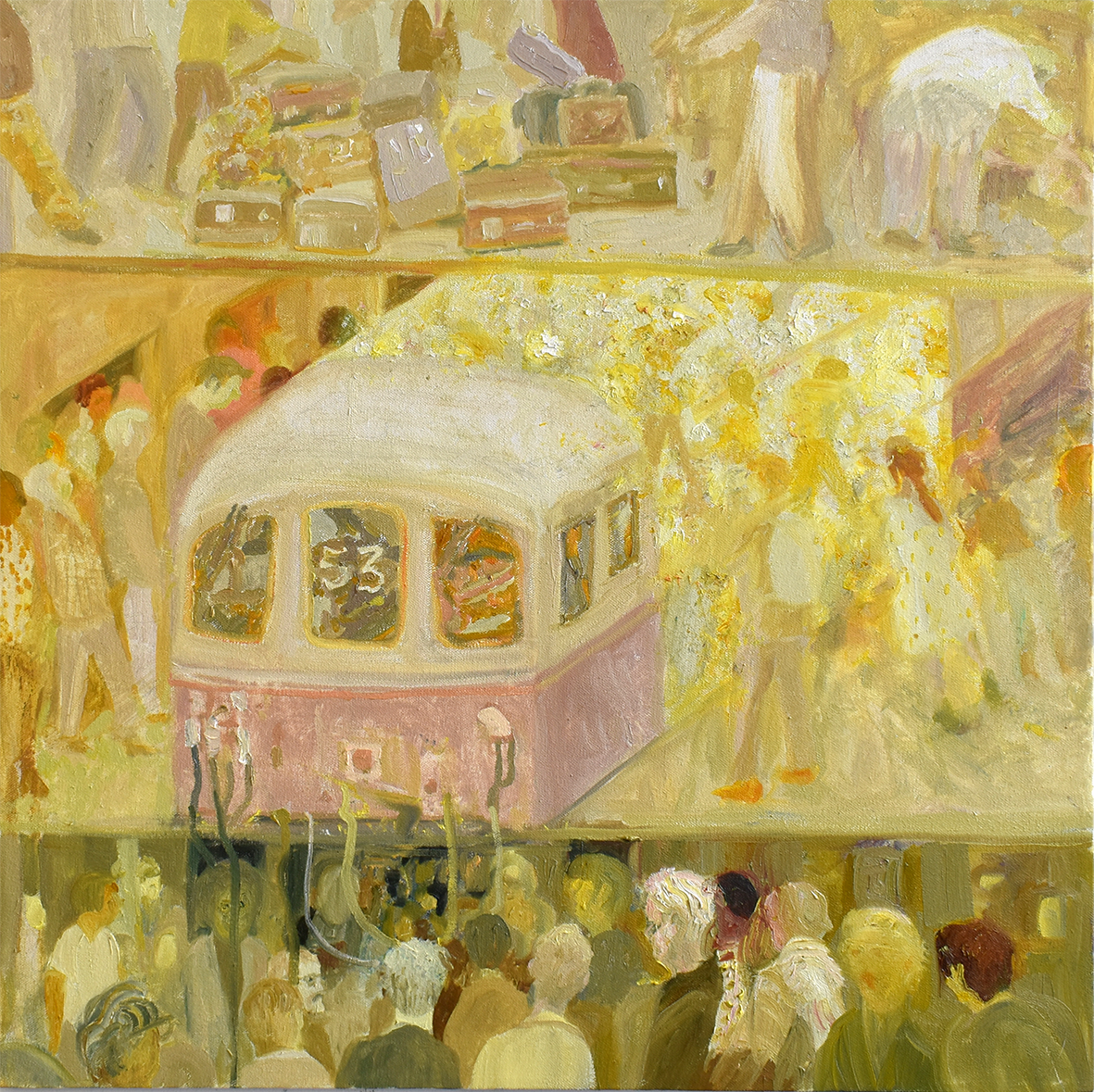
'The Station', 2025. Oil on canvas, 61 × 61 cm. framed 65 x 65 cm. £1,970
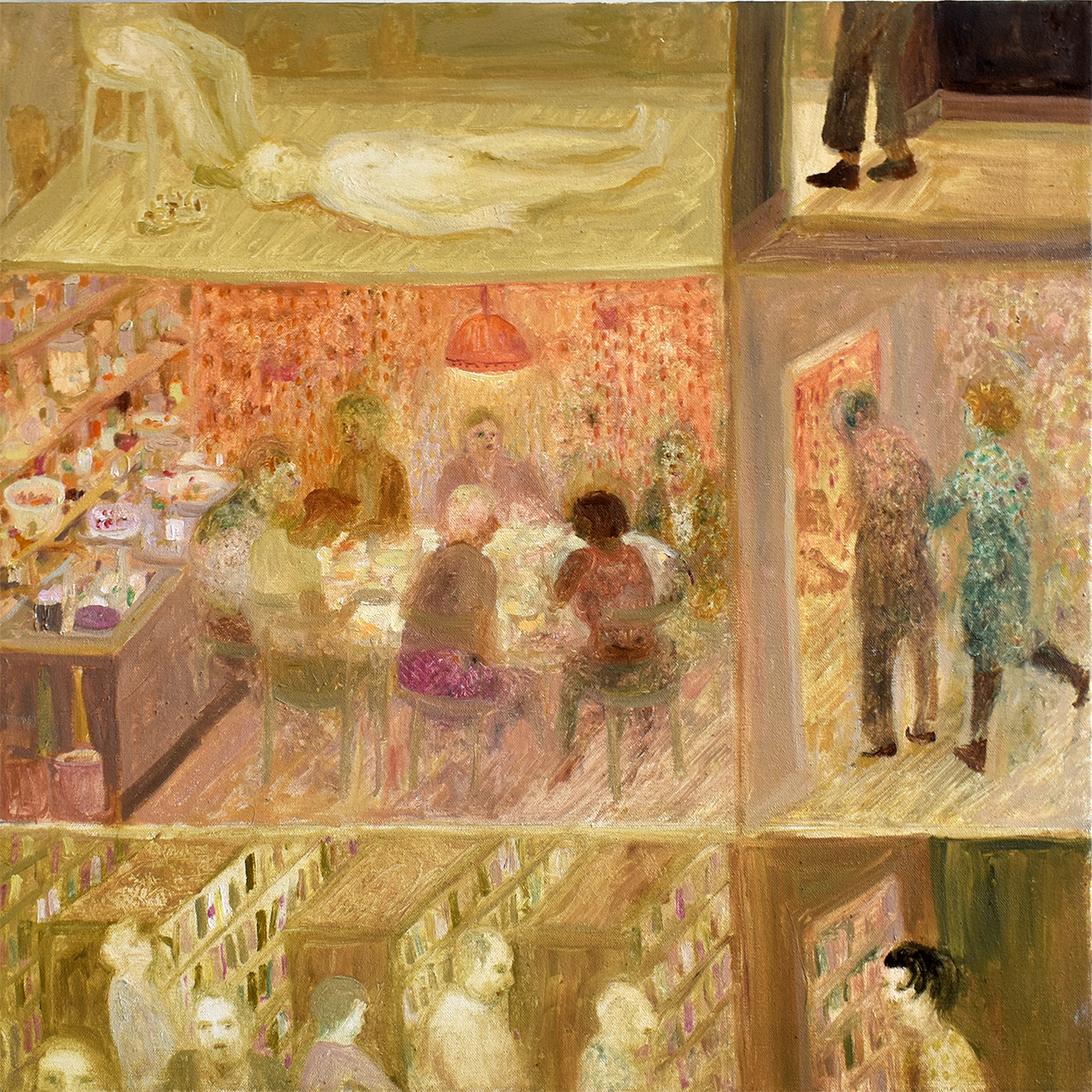
'The Body Upstairs', 2025. Oil on canvas, 61 × 61 cm; framed 65 x 65 cm. £1,970
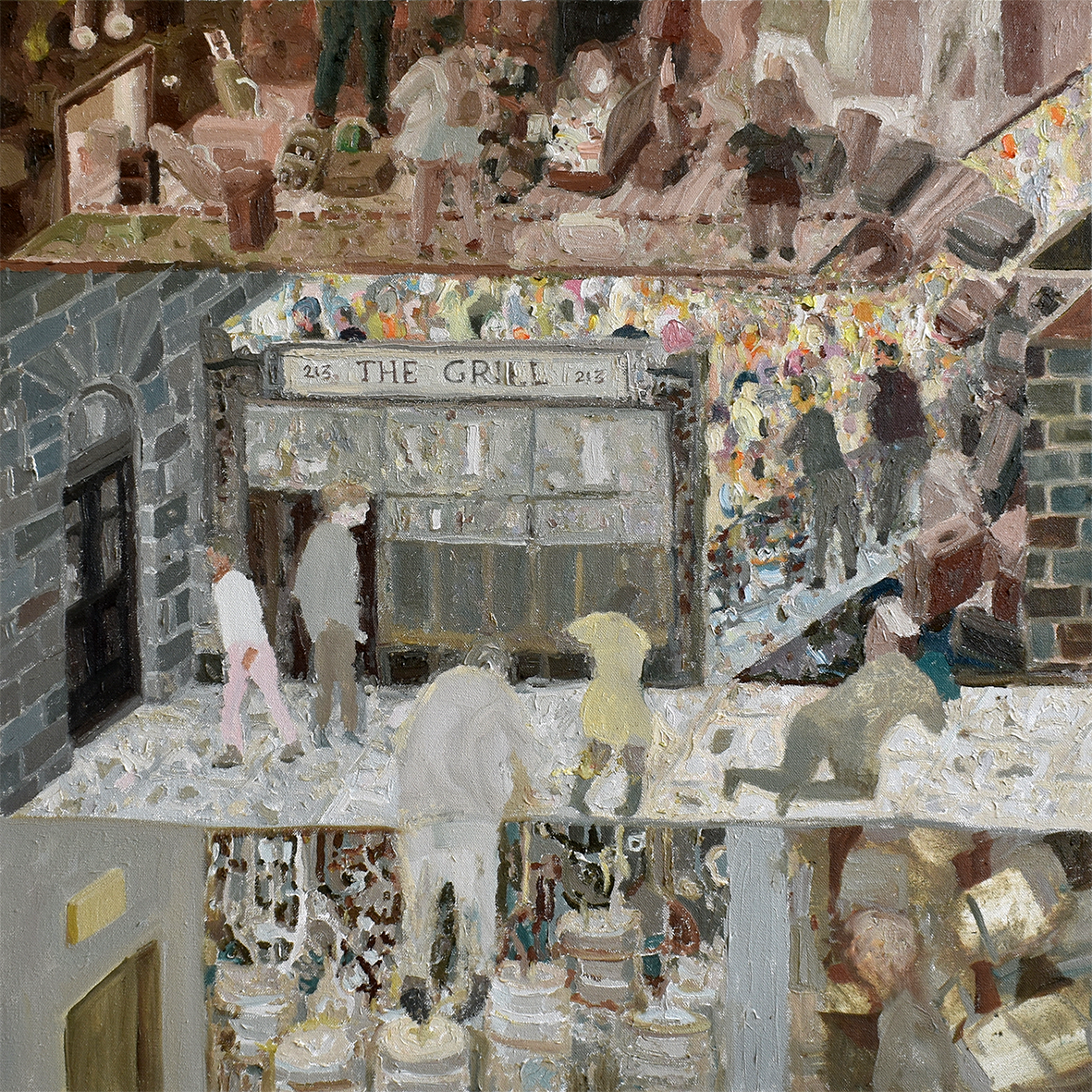
'The Grill', 2025. Oil on canvas, 61 × 61 cm; framed 65 x 65 cm. £1,970
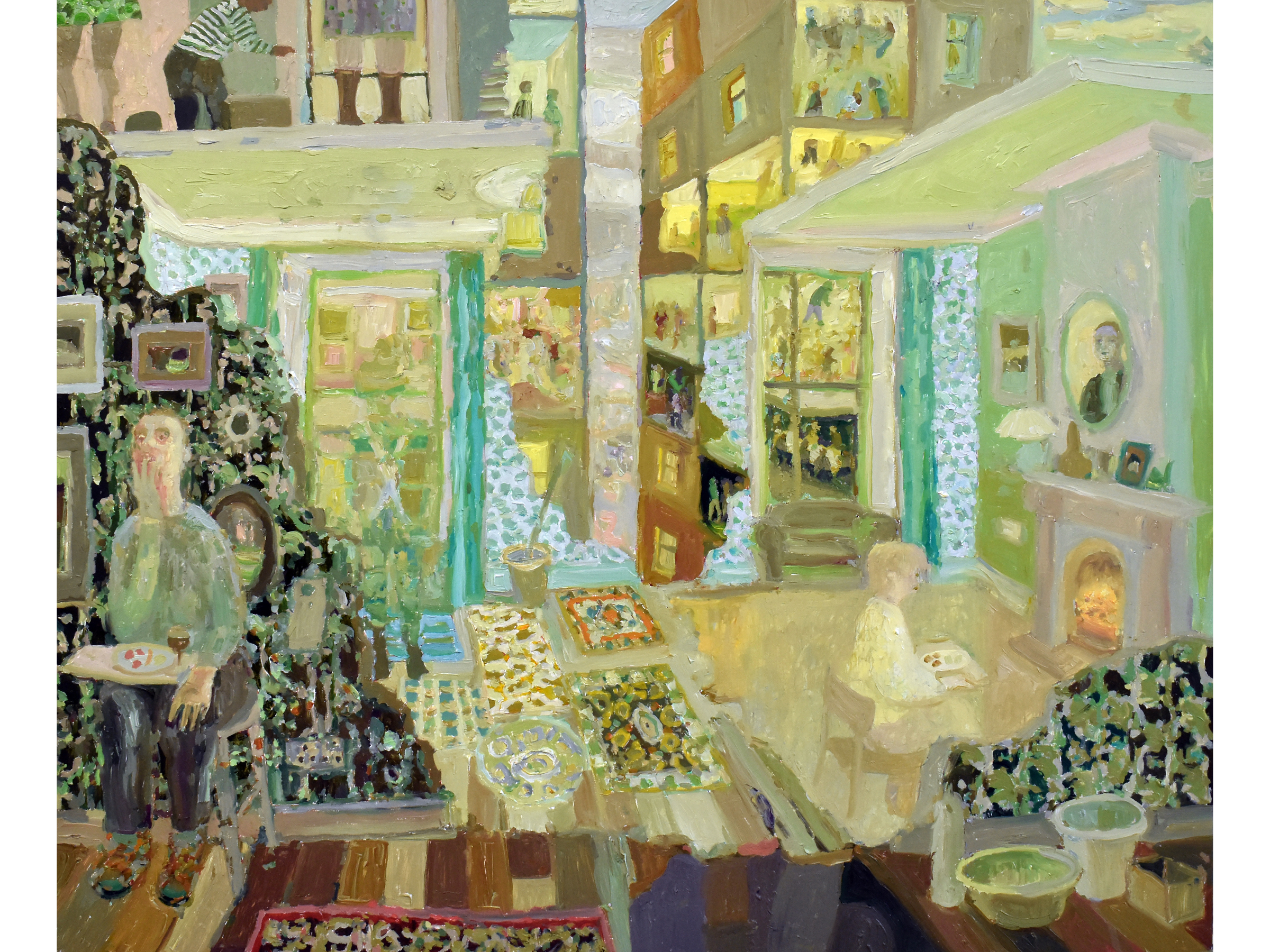
'The Overthinker', 2024. Oil on panel, 50 x 60 cm. £1,800
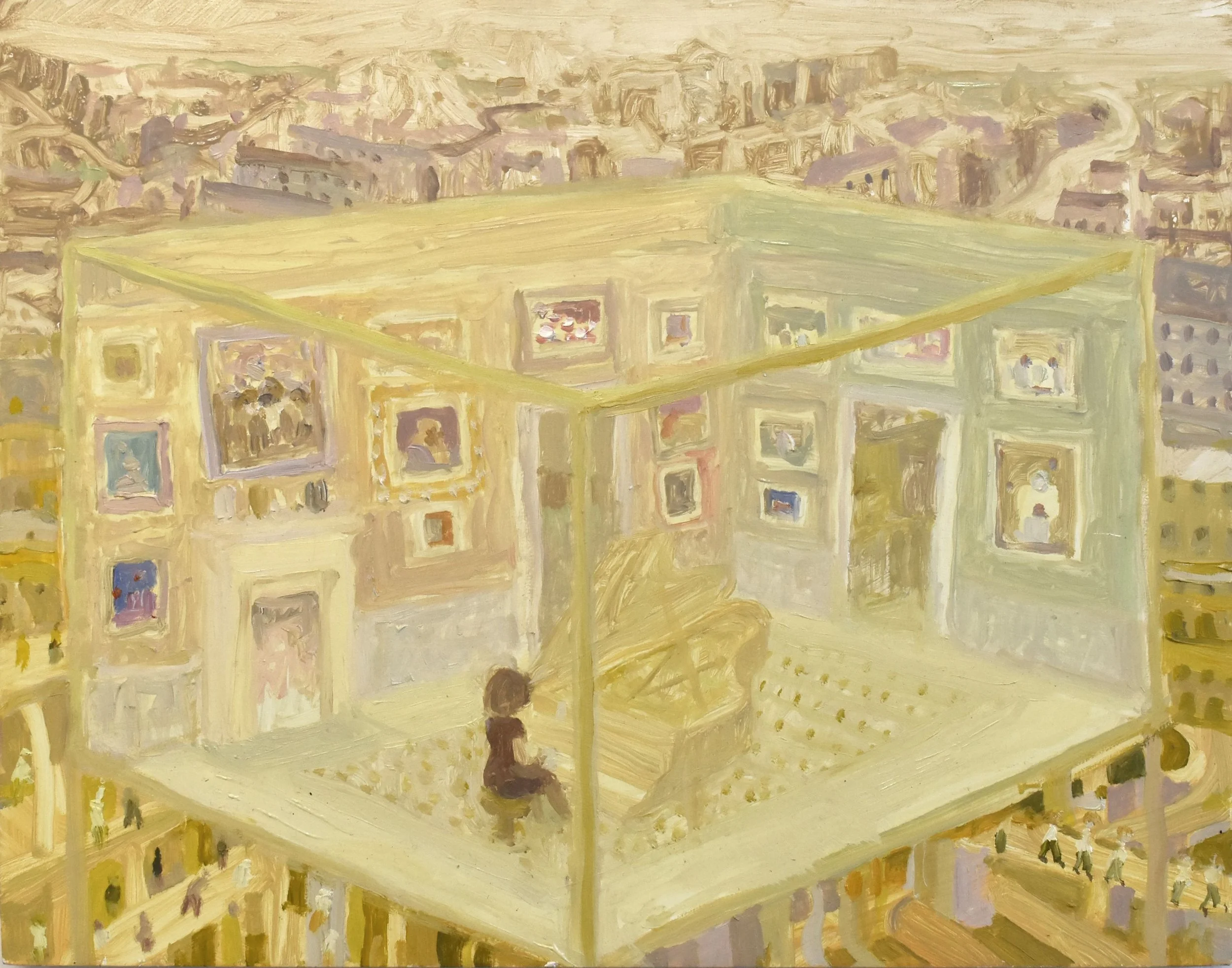
'The Pianist (Study 2)', 2024. Oil on panel, 28 x 35 x 2 cm. £700
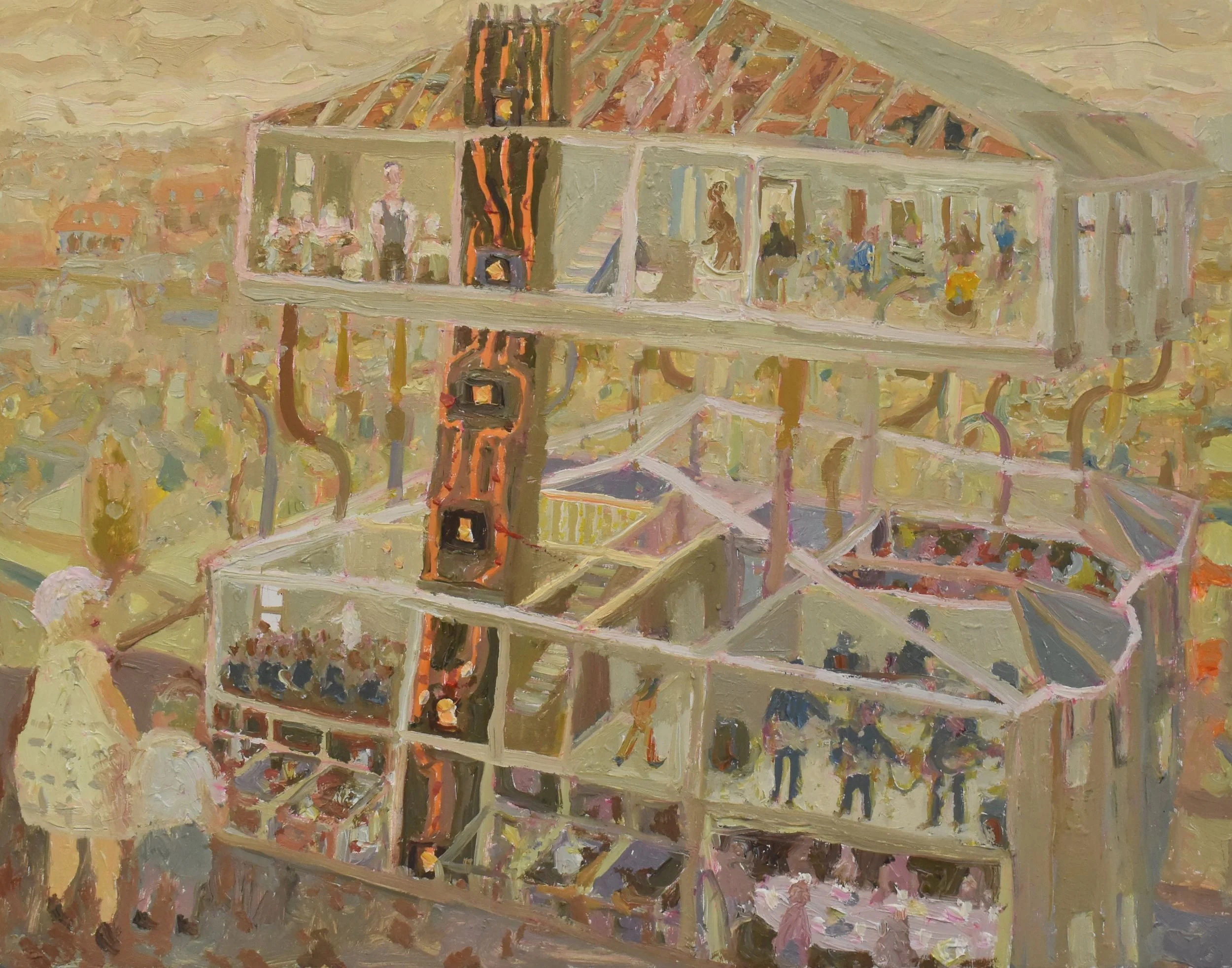
'Double Bungalow', 2024. Oil on panel, 28 x 35 x 2 cm. £700
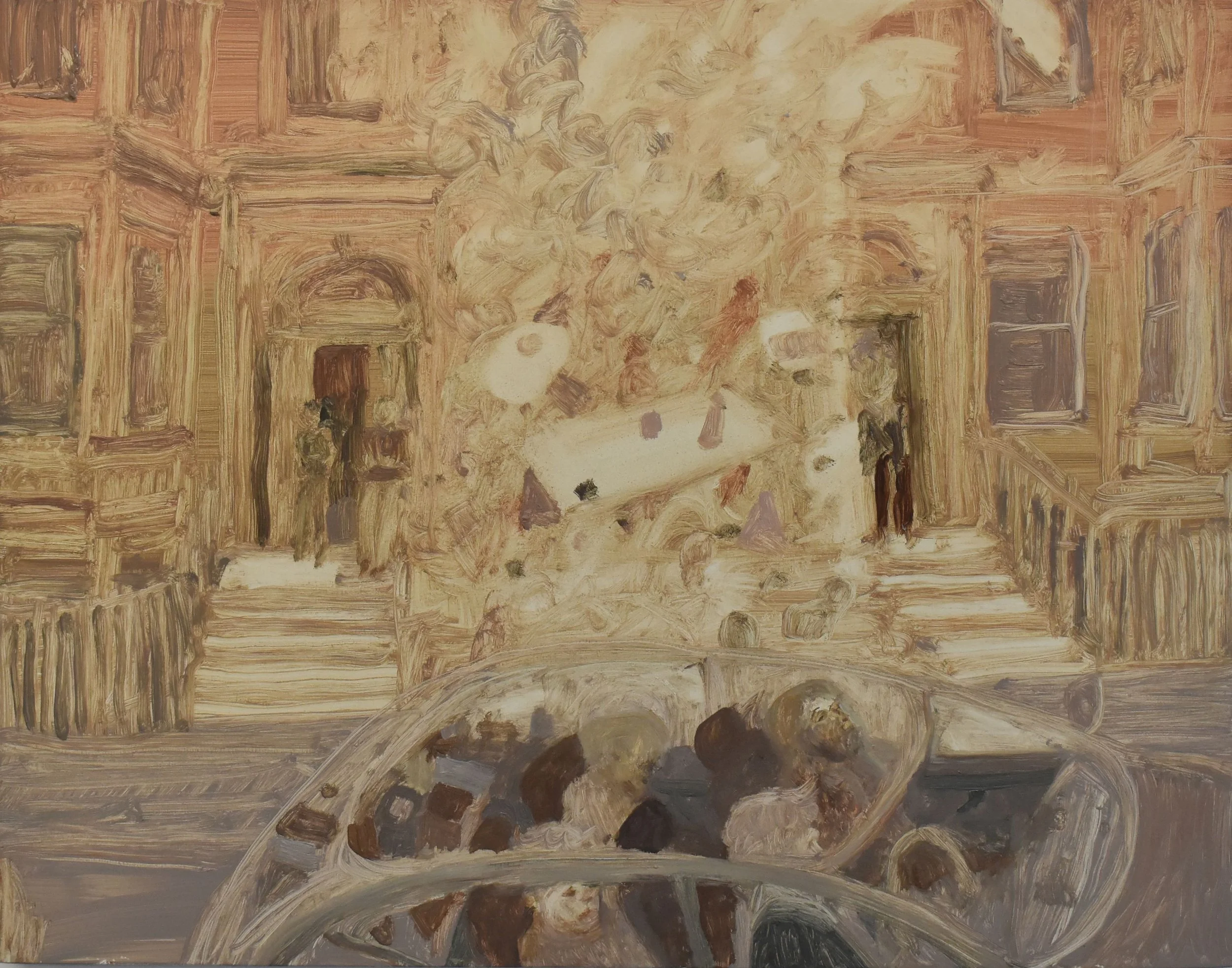
'Car Bomb', 2024. Oil on panel, 28 x 35 x 2 cm. £700
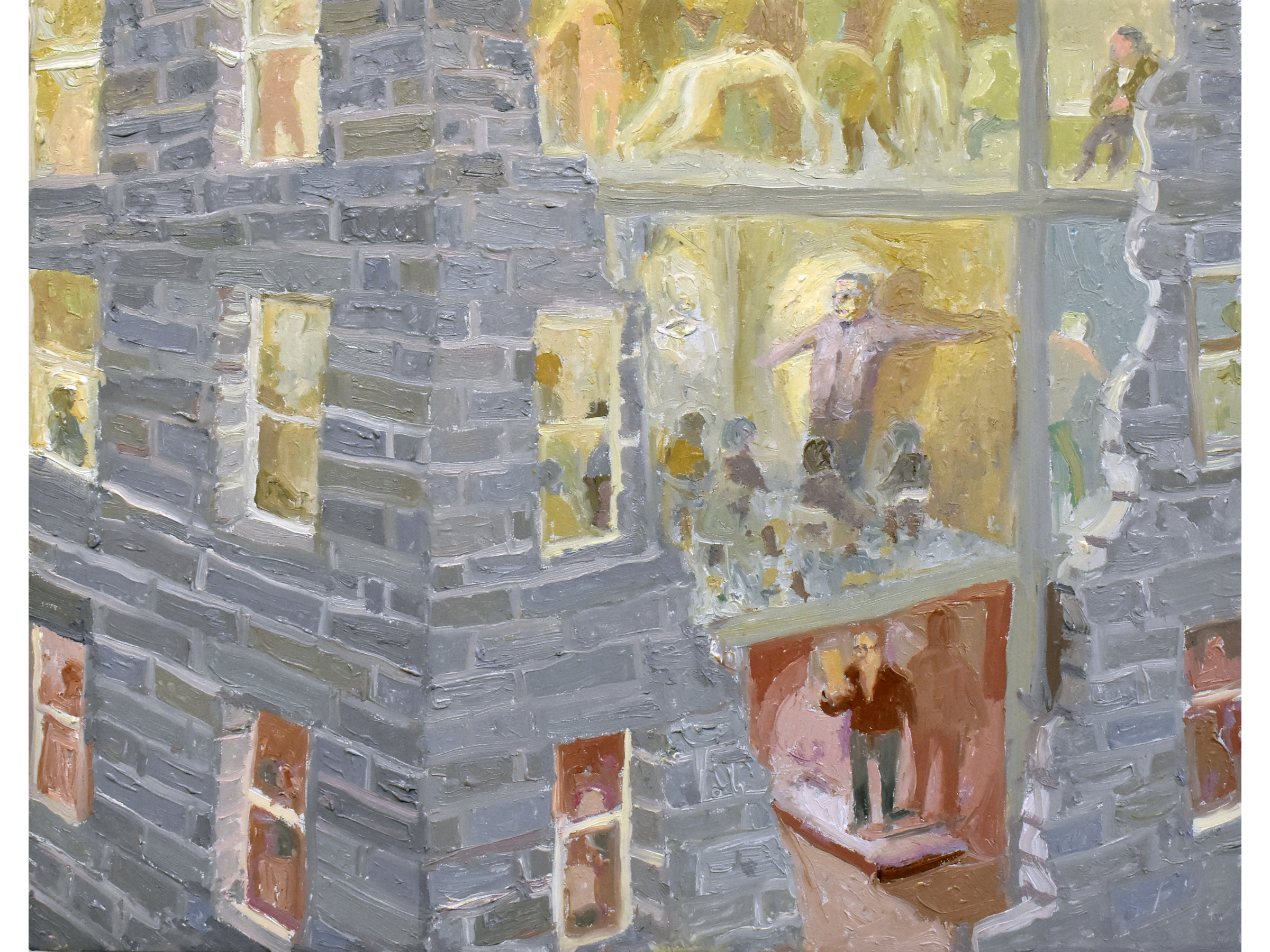
'Hole in the Wall'. Oil on panel, 28 x 35 x 2 cm. £700
Works on paper
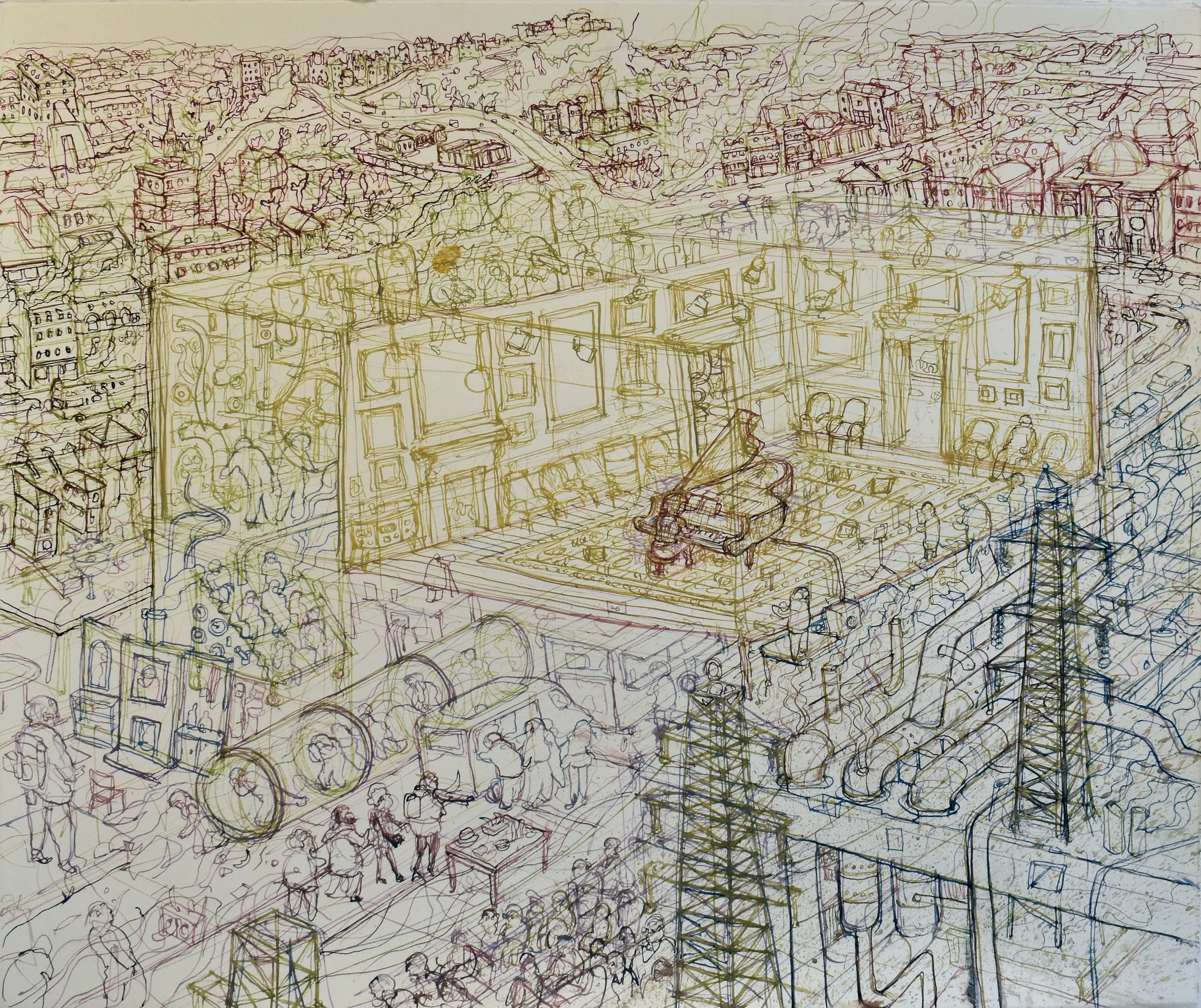
'The Pianist (Study)', 2024. Gouache. 47 x 56 cm, framed 57.2 x 66 x 3 cm. £1,350
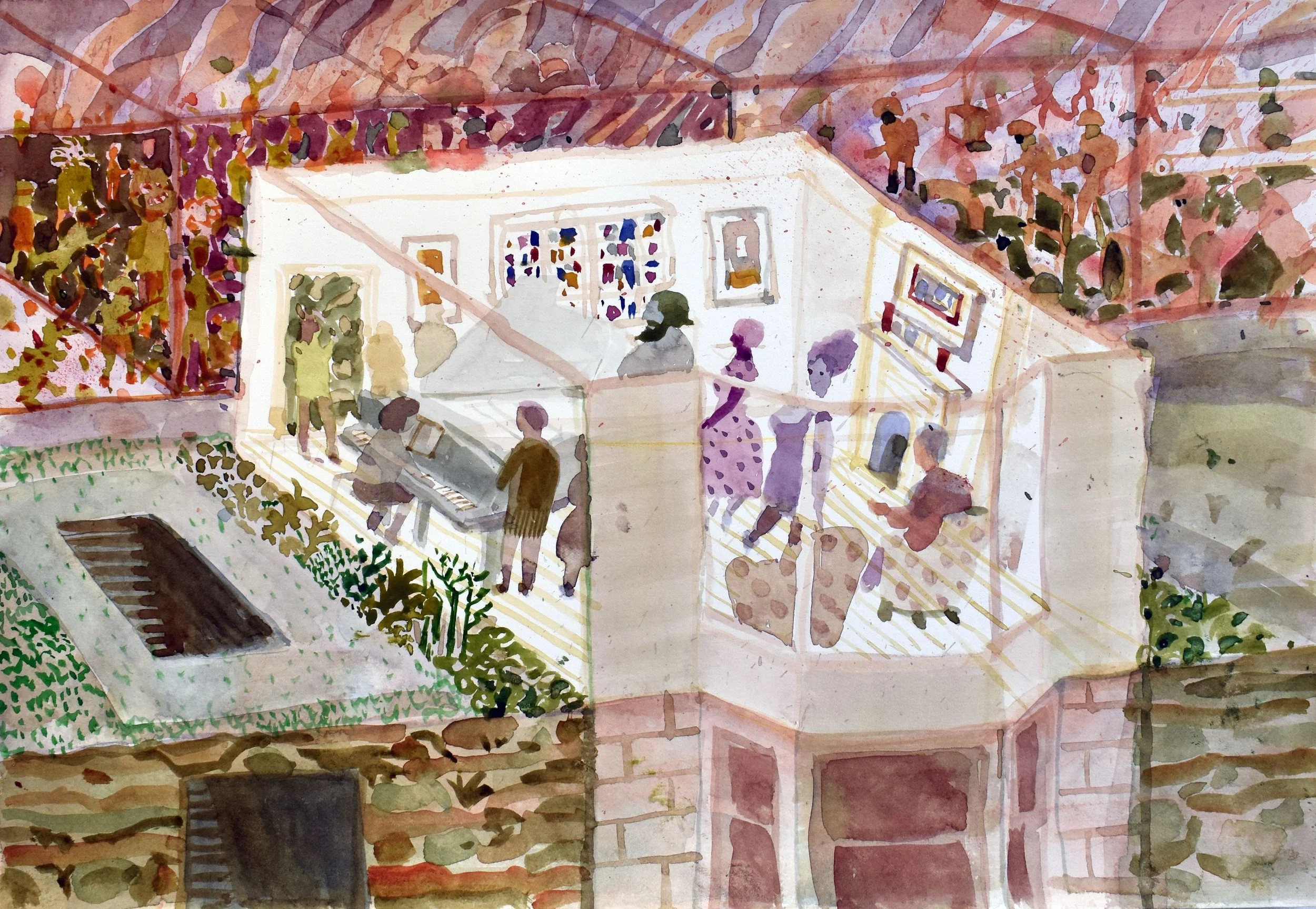
'Recital', 2025. Watercolour, 29 x 42 cm, framed 37.7 x 50 x 3 cm. £815
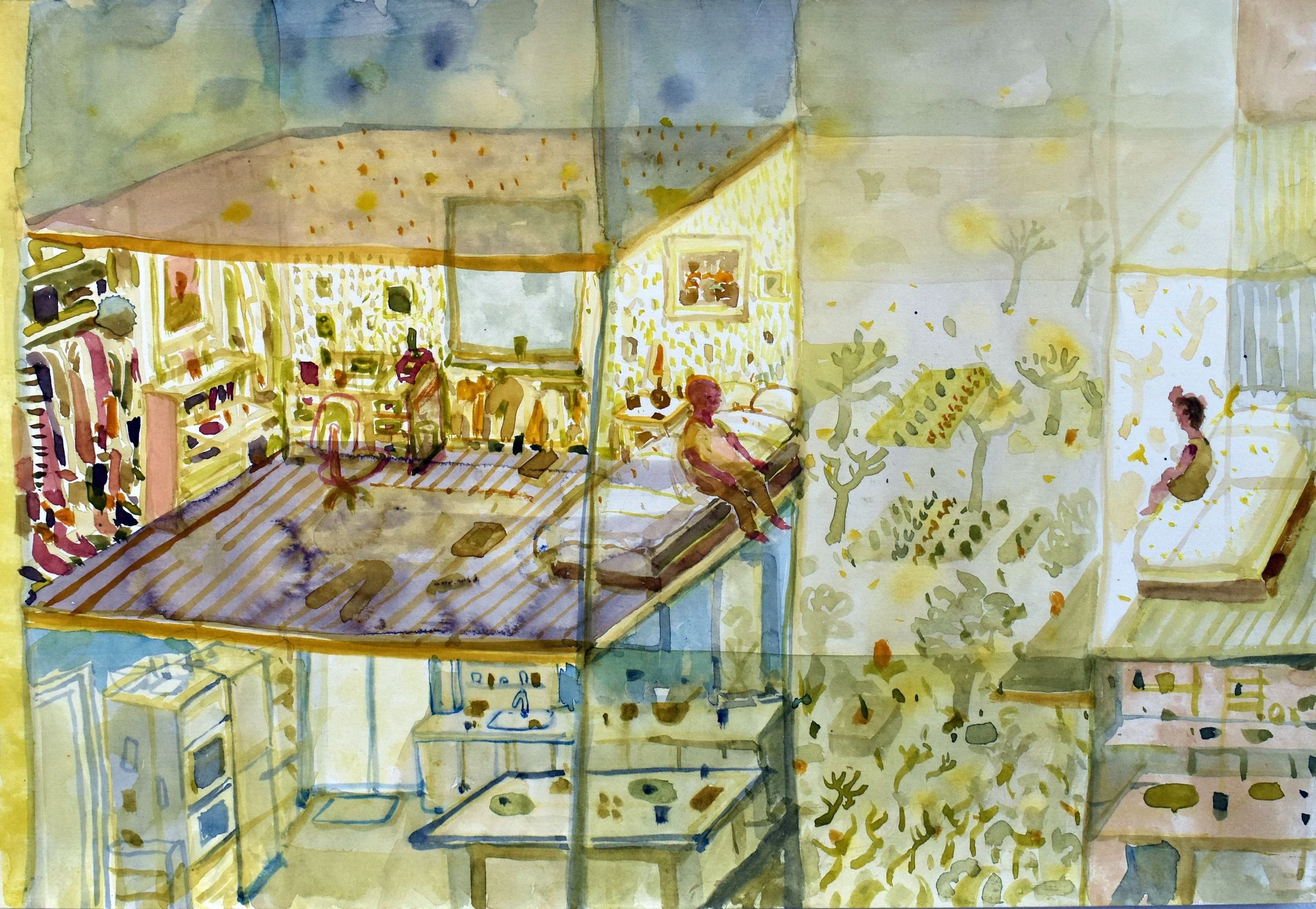
'The Rift (Study)', 2025. Watercolour, 29 x 42 cm, framed 37.7 x 50 x 3 cm. £815
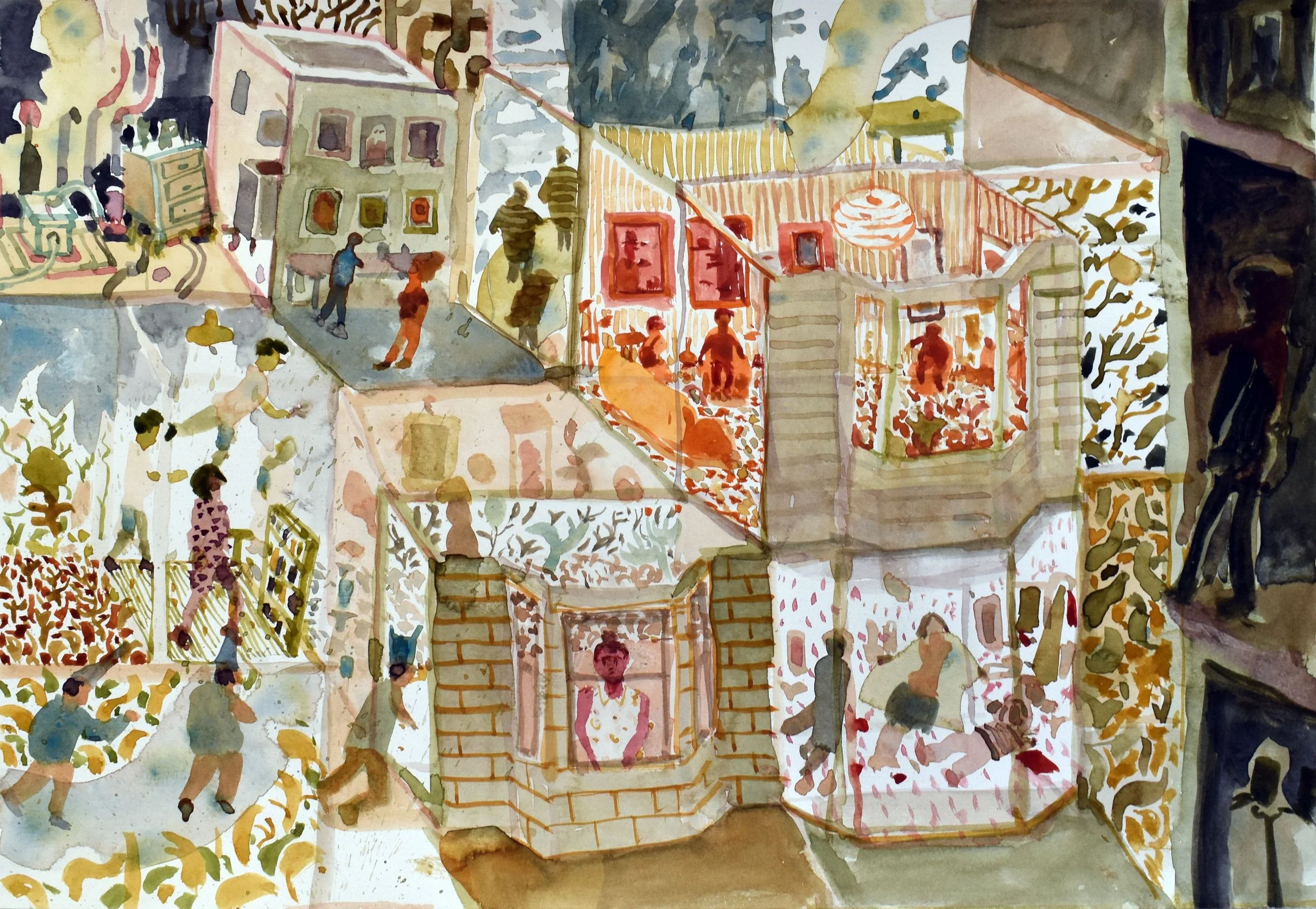
'Living Rooms', 2025. Watercolour, 29 x 42 cm, framed 37.7 x 50 x 3 cm. £815
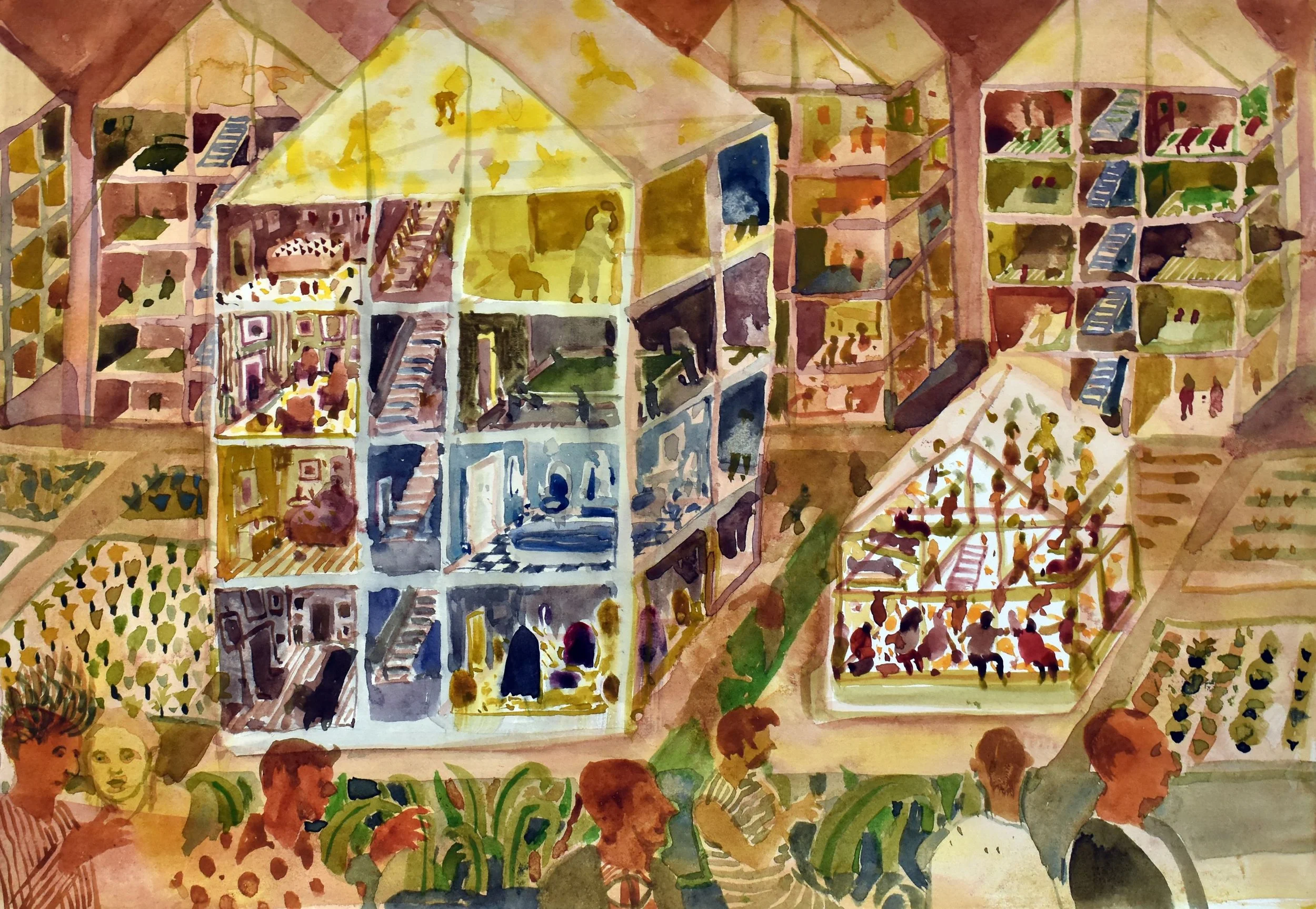
'Town Houses', 2025. Watercolour, 29 x 42 cm, framed 37.7 x 50 x 3 cm. £815

'Through Road', 2025. Watercolour on paper, 29 x 42 cm. £680 (unframed)
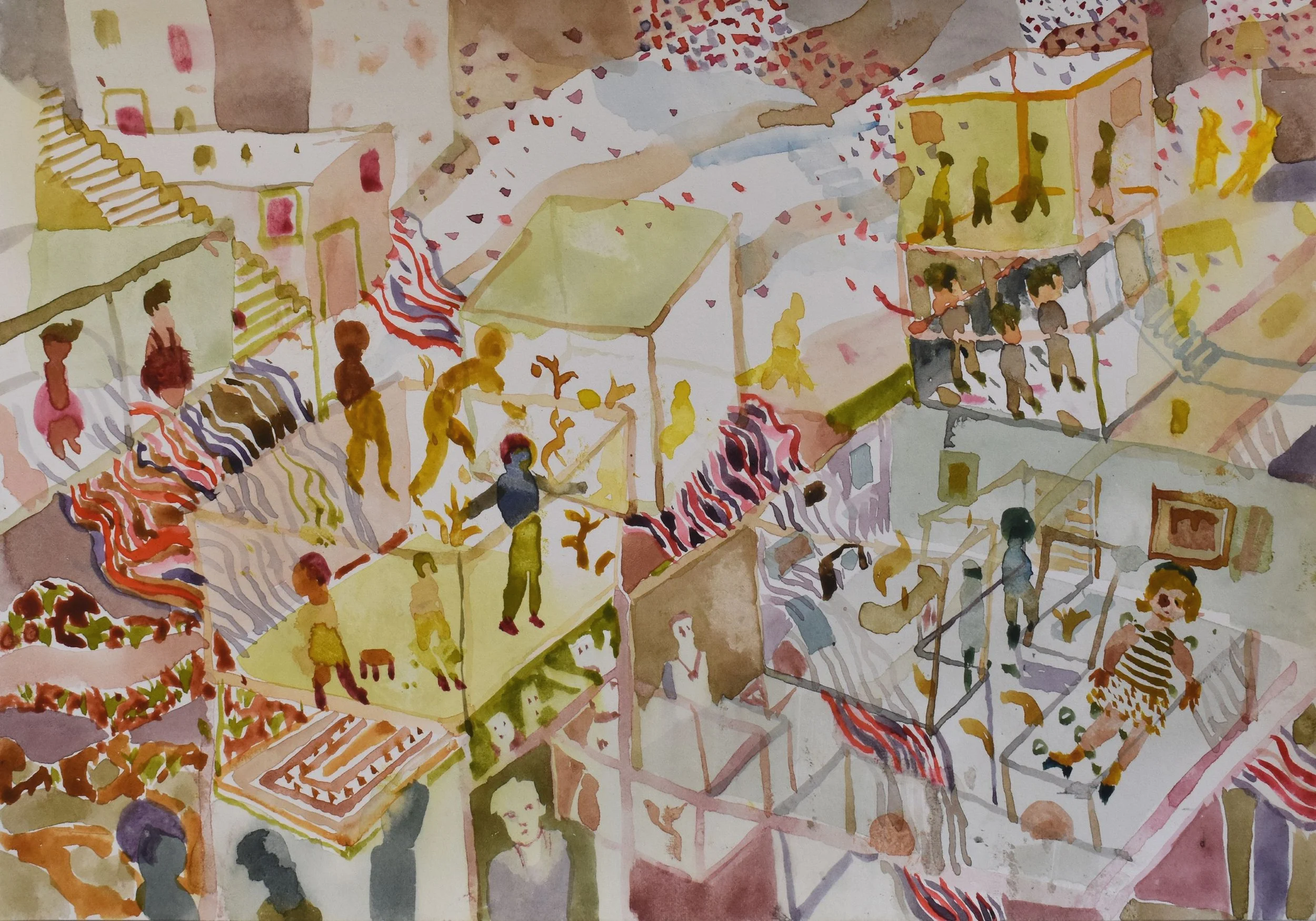
'Multi Stories (Study 1)', 2025. Watercolour, 21 x 30 cm, framed 29 x 37.8 x 3 cm. £460
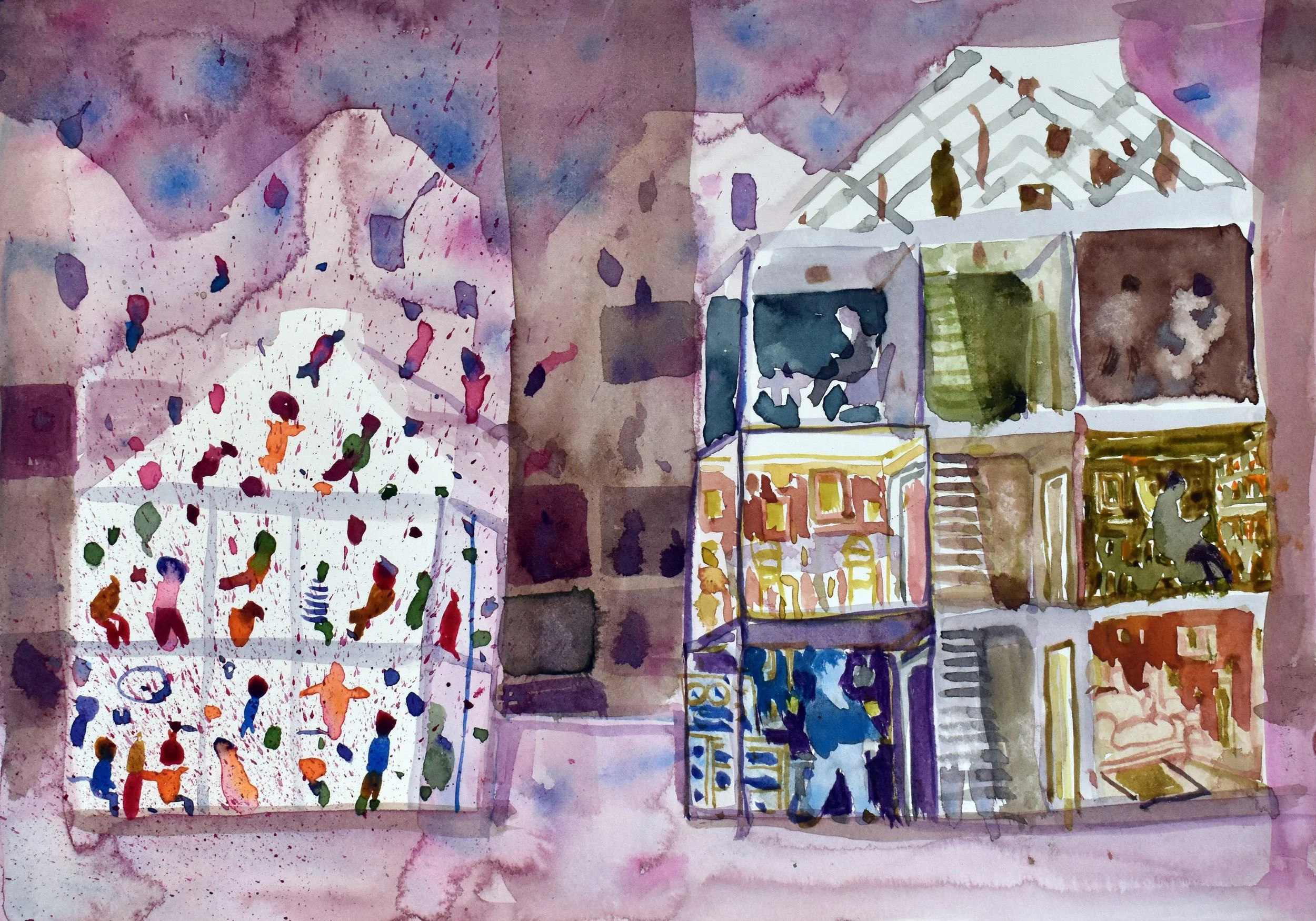
'The Two Towers', 2025. Watercolour, 21 x 30 cm, framed 29 x 37.8 x 3 cm. £460
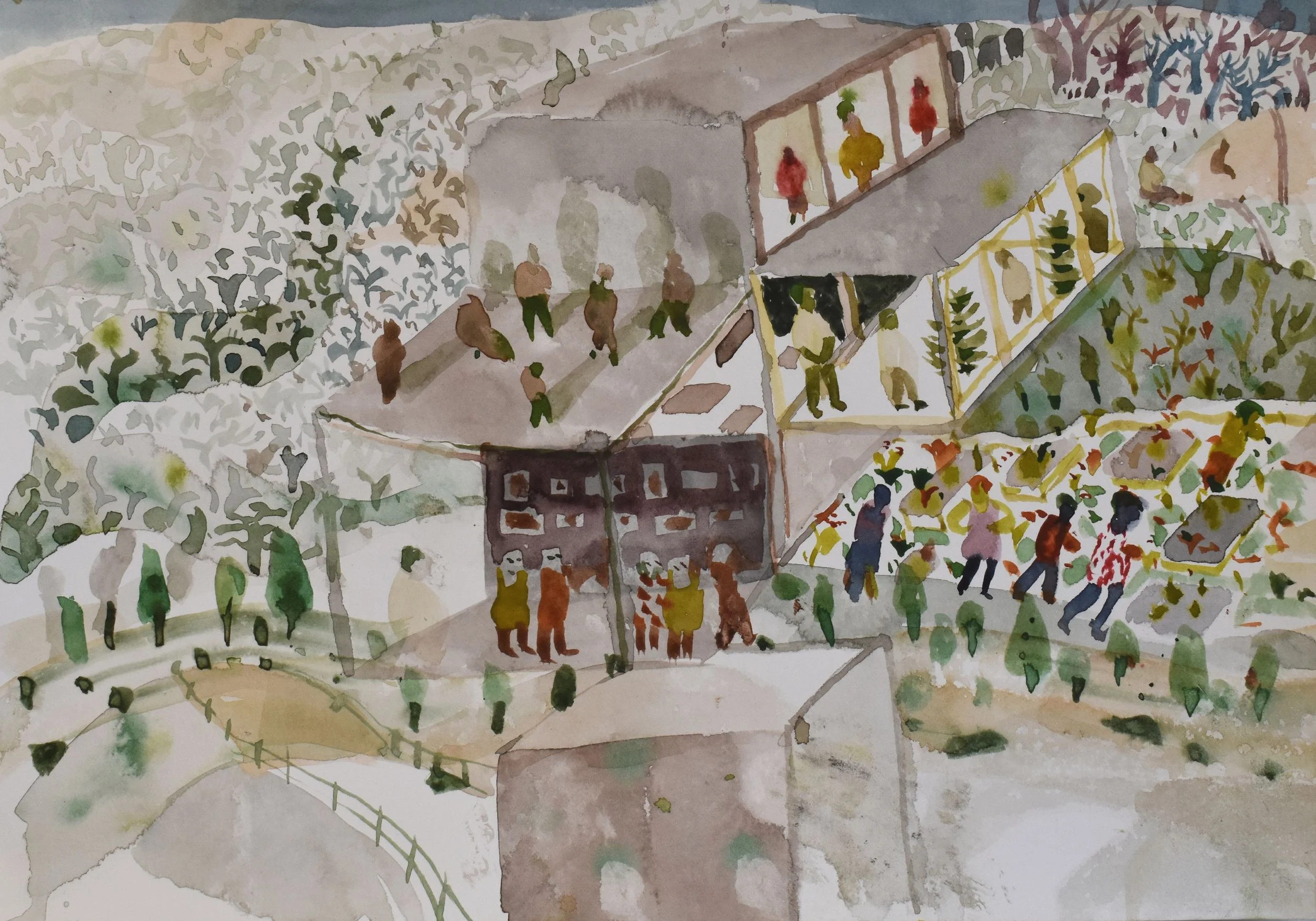
'Forest House', 2025. Watercolour, 21 x 30 cm, framed 29 x 37.8 x 3 cm. £460
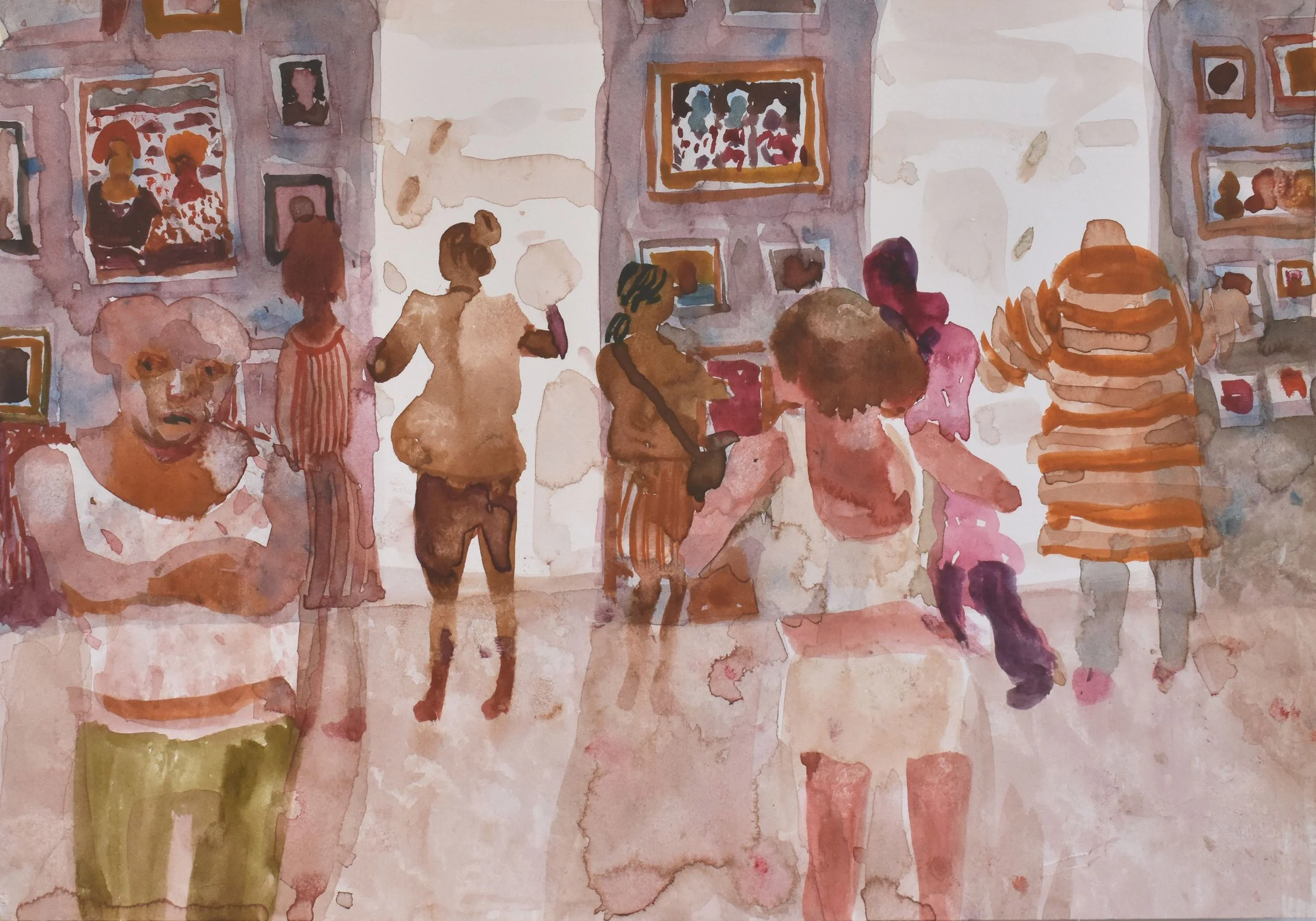
'View from the fifth floor', 2025. Watercolour, 21 x 30 cm, framed 29 x 37.8 x 3 cm. £460
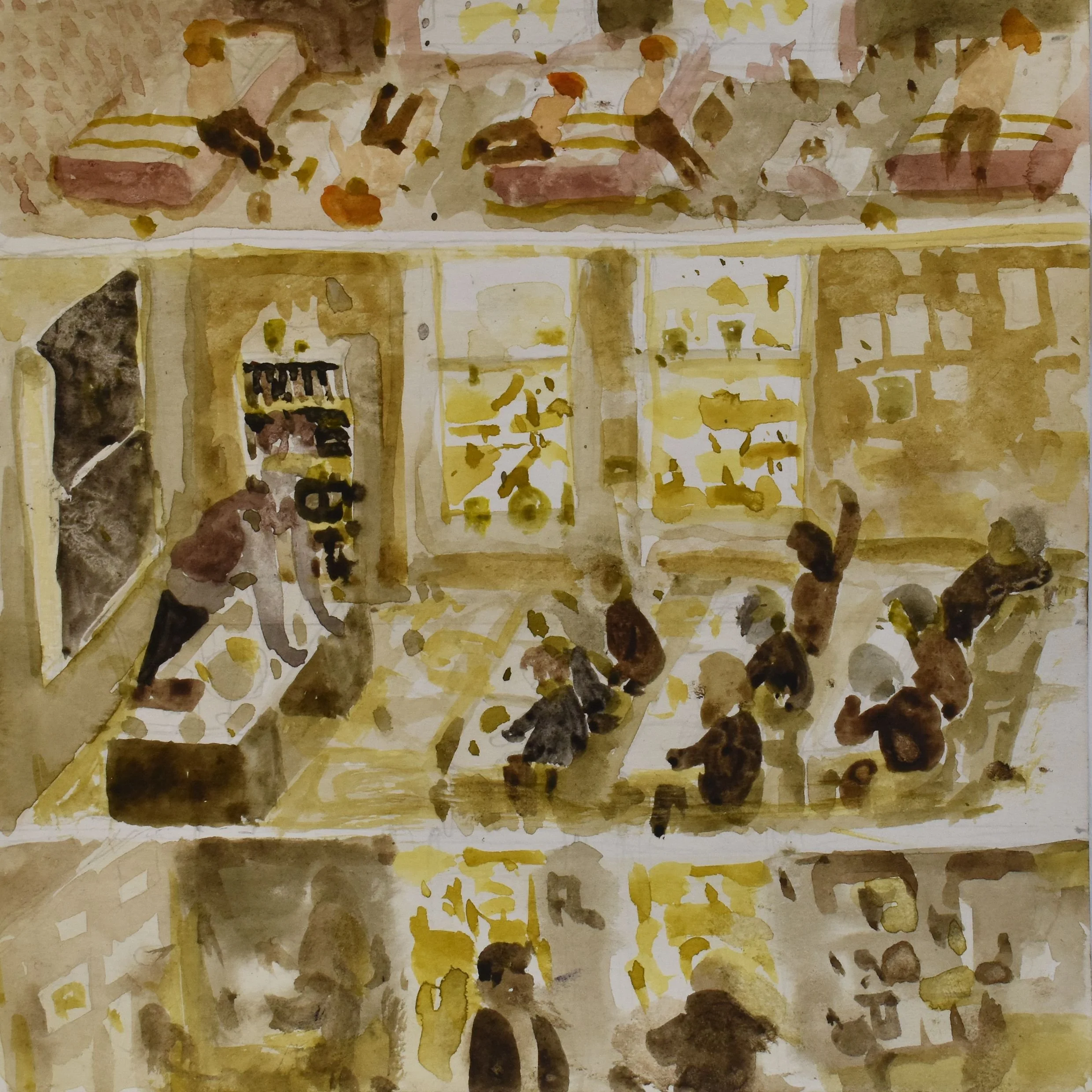
'Boarding School', 2025. Watercolour, 21 x 21 cm, framed 29 x 30 x 3 cm. £370
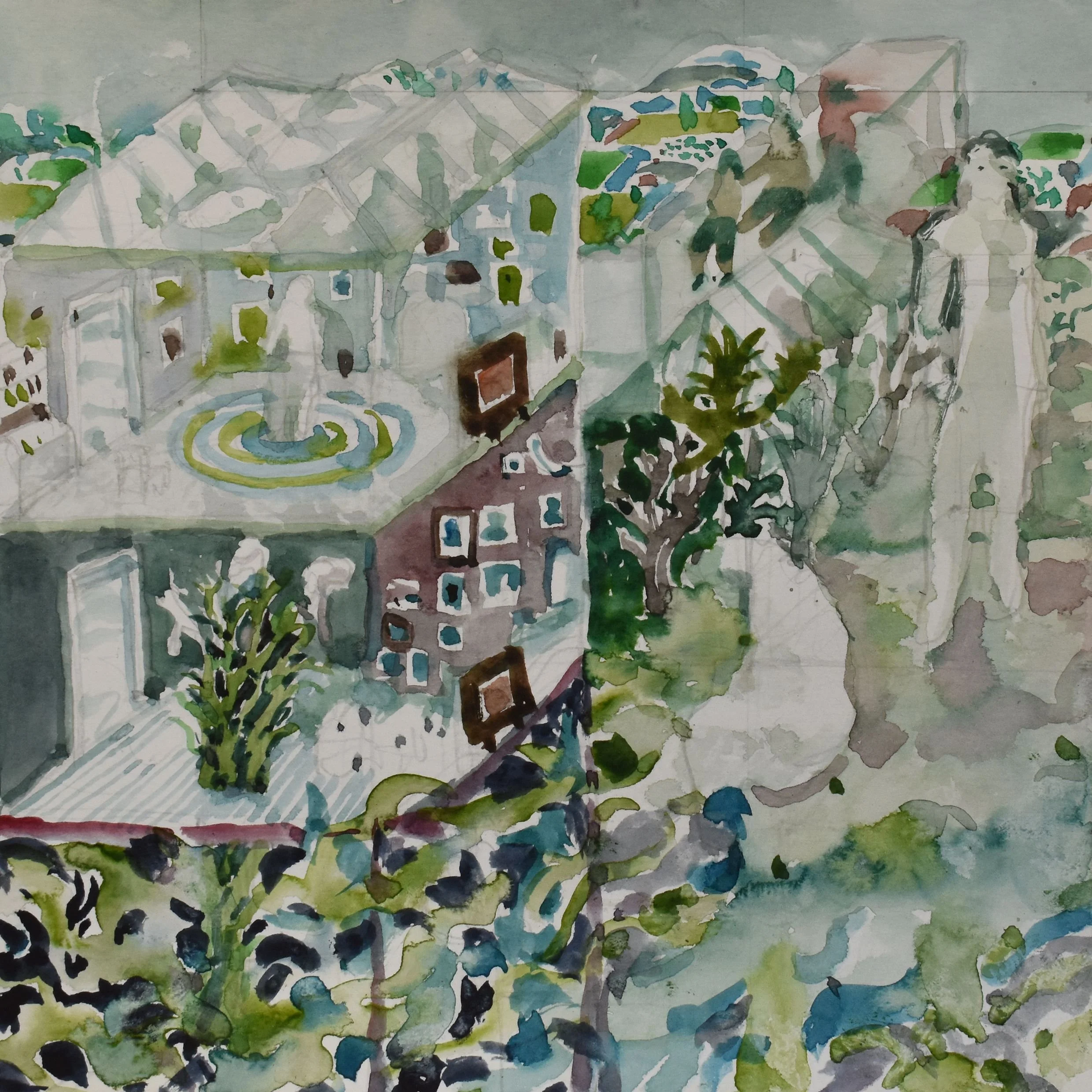
'Garden Extension', 2025. Watercolour, 21 x 21 cm, framed 29 x 30 x 3 cm. Sold
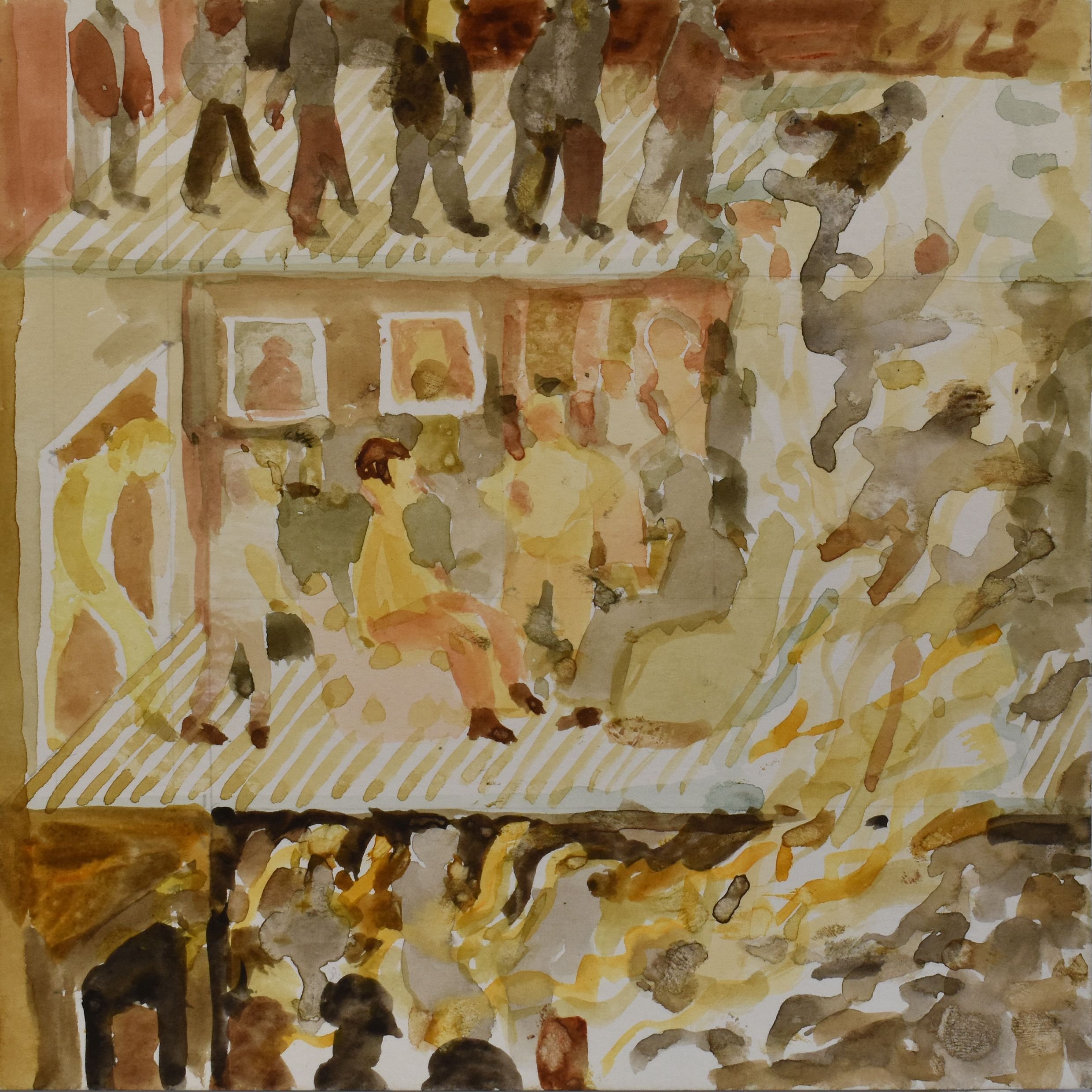
'The Fire Pit', 2025. Watercolour, 21 x 21 cm, framed 29 x 30 x 3 cm. £370
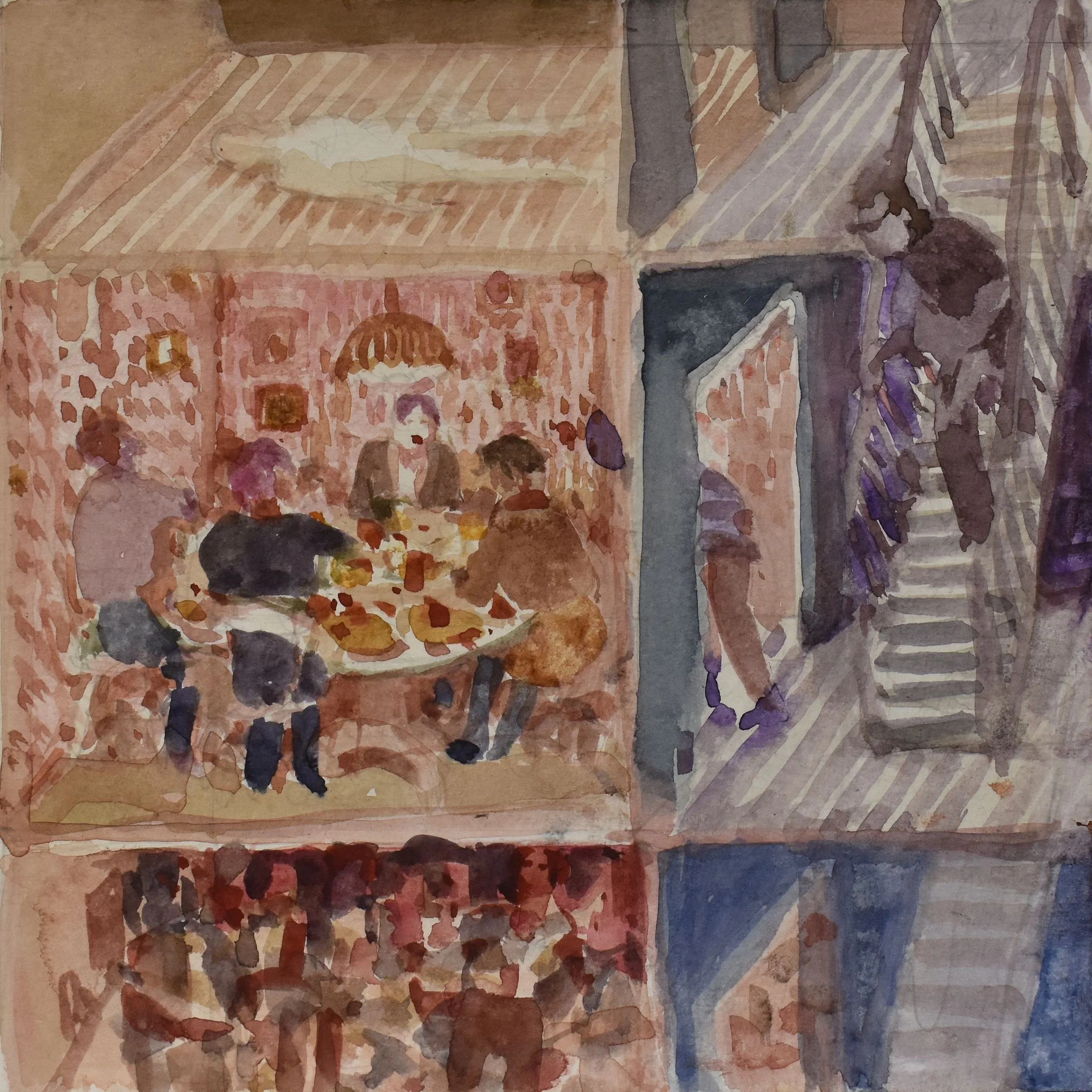
'The Round Table', 2025. Watercolour, 21 x 21 cm, framed 29 x 30 x 3 cm. £370
“Standing in front of one of Robbie’s large-scale canvases is a thrilling experience. Monumental in scale and depth, the towns, cities, streets, houses, gardens and tunnels play out in a great soap-opera of life. Swathes of masonry, earth and tarmac are sliced away to give very private, voyeuristic and extraordinary vignettes of everyday existence.”
“Robbie Bushe has become prominent to many through his successful shortlisting for painting prizes across the UK. These range from the John Moores Painting Prize (2020), the Contemporary British Painting Prize (2023) and The Jacksons Painting Prize (2023). Also in 2023, Robbie was the inaugural recipient of the Royal Scottish Academy Blackadder Houston Award for Mid-Career Painting. This prize of £20,000 from the RSA Blackadder Houston Fund enables an artist time and space to create a body of new work which will assist them to take the next step up in their career. In taking on this opportunity, Robbie negotiated time away from his teaching role at Edinburgh College of Art and set himself the challenge of creating eight new, large paintings. With the in-depth minutiae of his subject matter, this was a task of great proportions.
I would challenge anyone to be able to read, understand and fully enjoy a painting by Robbie Bushe in any degree of detail without spending some considerable time to absorb its complexity. Each work is a world of intrigue and wonder and they are all so familiar, so we play out our own imagination, memories and fantasies within their layers.
Standing in front of one of Robbie’s large-scale canvases is a thrilling experience. Monumental in scale and depth, the towns, cities, streets, houses, gardens and tunnels play out in a great soap-opera of life. Swathes of masonry, earth and tarmac are sliced away to give very private, voyeuristic and extraordinary vignettes of everyday existence. Records are strewn across a teenage bedroom floor; a pianist plays a symphony for only themself at a grand piano in bare tenement flat; a classroom of kids and a teacher – inspiring or droning … we aren’t quite aware which but we can relate none-the-less. The hive of busy activity and the importance of the mundane reflects to us our ‘going-about-it’ lifestyle. We are also flooded with memories…. of our childhood homes; granny’s attic; the smell of tenement stars; and the garden after the rain. It’s all here, this cornucopia of life. It’s all laid out for us in a textbook of ‘how to’ or perhaps ‘how it is’ or ‘could be’.
The analogy of textbook is deliberate, of course. The cut-aways - for peeping into - follow scientific diagrams with influences from Workshop Manuals and comics for boys such as Eagle. This method of exploring the subterranean world has also been used to great effect by London Transport for depicting the city’s underground system and stations. This technique is supremely effective. The planographic and scientific nature of investigation is the very nostalgic hook that brings us into these worlds, and our natural nosiness has us captivated as we look into every nook and cranny. Robbie’s formative years from childhood to student-digs are told in short stories within the wider works and perhaps we all see elements of ourselves in there too. Sunday afternoons in a quiet house with each family member engaging in a different activity in a different room. Squabbles and tenderness emanating from figures in close isolation and proximity with an understanding of acceptance and a hint of otherness.
To produce these works in such a short time is no mean feat. However, the method of painting changes over the course of this timeframe. Robbie is a great draughtsman. He draws incessantly and this has included the under-drawing of his canvases as he plans out their sprawling greatness. The most recently completed few of these large paintings changes direction though. Instead of meticulously and accurately sketching-in his plans for the painting, he has taken a leap into trusting his instincts with the paint directly to the surface of the canvas. This has resulted in a more open, painterly approach and it can also be seen as a return to an earlier time in his career when this method of working was prevalent. These latest works are even more dream-like and the paint colours and marks sit in harmony without restraint. The looseness of application adds another level of soporific enchantment to the scenes. Deep breaths and steady eyes are required to work one’s way around a painting and take everything in. The subject of the paintings has an innate ‘busy-ness’, yet time stands still in each work – a moment of extreme activity, captured in time. Time is also our friend (and foe) as we mindfully give over our attention to the exploration of these magnificent paintings and the myriad of life being explored there.
As well as the eight canvases, there is a plethora of watercolours, smaller studies and sketches. These range from trial ideas to working models for larger canvases. They are no less interesting nor less complex. The speed and observation of Robbie’s mind has savant-like frenzy. Ideas tumble onto the paper and canvas as if they may run out of fashion. However, they keep coming in droves. We are treated to nostalgic reminiscence and fantastical future megalopolis – like mid-century visions of dystopian/utopian speculative fiction. It’s life as we know it and as it was but it’s nothing quite like it will be…. yet.
Bringing this all together seems to have reset Robbie’s outlook and reinvigorated his already vigorous practice. If time can be bought to create such wonder then that’s most certainly worth any investment in my opinion.”
Colin R Greenslade
Director, Royal Scottish Academy of Art & Architecture, February 2025